
Water Sort Puz - Color Game
BluetilePuzzle
4.814.55K Reviews
- Version
- 3.9.1
- Installs
- 10.00M
- Age Rating
- Everyone
Screenshots



Our Review of Water Sort Puz - Color Game
 Analysis by Appyee
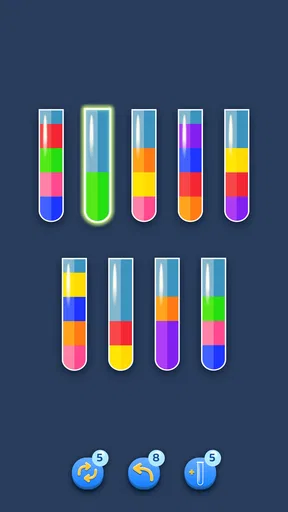
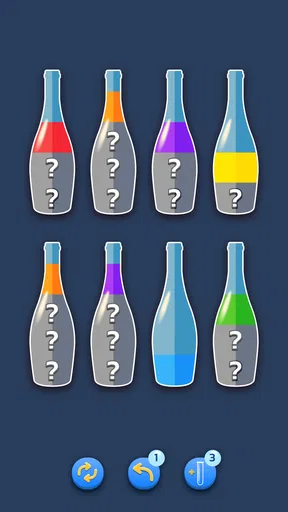
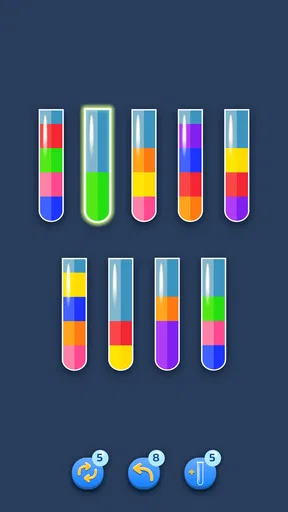
I approached Water Sort Puz - Color Game as the kind of puzzle I could pick up without preparation, play for a few minutes, and put down without losing my place. That impression proved accurate. The game presents a bottle-and-water sorting challenge: colored liquid must be organized into matching containers, with each move requiring enough empty space to keep the puzzle solvable. It is easy to understand, but the decisions become more deliberate as the board gets crowded.
That combination makes it a useful choice for people who want a quiet brain exercise rather than a story, competition, or reflex test. I can see myself using it during a short break, while waiting for an appointment, or at the end of the day when I want something engaging but not noisy. It is free to start, aimed at Everyone, and developed by Bluetile. The large audience—over ten million installs, with an average rating of 4.8 from hundreds of thousands of ratings—also suggests that its simple format has broad appeal.
How I Decided Whether It Was Worth Keeping
My first criterion was clarity. A sorting puzzle should teach its central rule quickly, and this one does. You move water from one bottle to another when the destination has room and the colors can be combined. The objective is not hidden behind a tutorial-heavy interface or a complicated progression system. Within a few attempts, I was thinking about the order of my moves instead of trying to understand the controls.
The second criterion was whether the game could support both casual and thoughtful play. Some mobile puzzles are enjoyable only when played intensely, while others become repetitive almost immediately. Here, the best sessions depend on the level in front of me. A straightforward arrangement lets me relax and move quickly; a more tangled arrangement makes me pause, inspect the available spaces, and plan several actions ahead.
I also paid attention to how forgiving the experience felt. Sorting games can become frustrating when one careless move ruins a board and forces a complete restart. My practical advice is to treat empty bottles as working space, not merely as places to pour into. Preserving at least one useful opening often matters more than completing a color at the earliest opportunity. That small change in thinking makes the puzzles feel more strategic and less like trial and error.
Another decision point is the type of concentration you want. This is a visual logic game, not a word puzzle, number puzzle, or fast arcade challenge. If you enjoy arranging patterns and mentally simulating consequences, the format is a good match. If you prefer clues, stories, timed rounds, or a constant stream of new mechanics, the narrow focus may feel limited after the novelty fades.
The basic loop is simple, but the board rewards restraint
In my experience, the strongest habit is to avoid pouring merely because a move is legal. A legal move is not always a useful move. Combining two matching colors can be helpful, but it can also block access to a different color that you need to move first. I began scanning the bottles from top to bottom, identifying which layers were trapped, and then deciding whether an empty container should be used temporarily.
That approach reveals one of the game’s less obvious strengths: it trains sequencing rather than just recognition. You are not only matching colors. You are deciding which match should happen now, which should wait, and how to preserve room for future transfers. For a short mobile puzzle, that is a satisfying amount of planning.
A practical technique is to use a “release” move. Instead of trying to finish a color immediately, I sometimes move its upper layer to an empty bottle so that the color underneath becomes accessible. This can look like a step backward, but it creates options. Players who rush to fill a bottle may accidentally remove the flexibility needed to solve the rest of the board.
Why it works well for short everyday sessions
The game fits naturally into small gaps in the day because a single puzzle does not require a long commitment. I could imagine opening it during a commute pause, playing while waiting for food, or using it as a calmer alternative to scrolling through social feeds. The mental demand is enough to occupy attention, yet the rules are familiar enough that I do not need to warm up.
It also suits people who want a low-pressure activity before sleep, provided that visual puzzle solving does not keep them mentally active. I found the absence of a story or complicated objective helpful in that setting. There is no need to remember characters, missions, or a large map. The current arrangement is the whole problem.
For families, the Everyone rating makes the game approachable across age groups, although younger players may still need help understanding why a seemingly correct pour can create a dead end. That can actually turn a level into a small exercise in planning together. I would not present it as an educational tool in a formal sense, but it does encourage patience, visual grouping, and thinking ahead.
Where this particular game has an advantage
The biggest advantage is immediacy. Compared with larger puzzle games that introduce several modes, this one keeps attention on the sorting task. That makes it easier to recommend to a friend who says, “I want something simple, but not mindless.” The bottle layout gives every move a visible consequence, so progress is easy to understand without reading instructions.
It is also more relaxing than many alternatives built around countdowns or rapid tapping. I can take a moment to inspect the board instead of reacting under pressure. That makes the game suitable for players who enjoy logic but dislike losing because they were not fast enough.
The visual structure is another practical benefit. Colors make relationships immediately apparent, and the bottles provide a clear sense of capacity. I found it easier to reason about the position than in some abstract tile puzzles where the board state becomes difficult to read after several moves. The format is especially comfortable for players who prefer concrete objects and spatial arrangements over symbols.
There is a useful distinction between solving and experimenting. When I was confident, I planned transfers in advance. When I was not, I used a move to learn how the board opened up. That makes the game approachable for beginners while still leaving room for better technique. The most rewarding improvement is not learning a special trick; it is learning to protect future choices.
Limitations that matter before you commit
The same narrow focus that makes the game approachable can become its main weakness. If you want varied puzzle types, this is not the right destination. You will not be switching between wordplay, matching, physics, and story challenges. The core activity remains sorting colored water, so your enjoyment depends heavily on whether that loop continues to feel satisfying.
There can also be moments when the puzzle feels less like discovery and more like correcting a mistake. If I filled a bottle too early, I might need to undo the logic of several moves rather than simply continue forward. Players who dislike revisiting decisions may find that friction annoying. My solution was to slow down before using the last open space, because that move often determines whether the board stays flexible.
The free entry is attractive, but in-app purchases range from $0.99 to $21.99 per item. That does not change the basic appeal of trying the game, yet it is worth remembering if you are sensitive to optional spending. I would begin without buying anything and decide later whether the extra convenience or support offered in the app is meaningful to my own play style. The game is best judged on its free starting experience rather than on an assumption that every player needs purchases.
Another point is that a high rating does not guarantee a universal fit. The game has an average of 4.8 and around 661 thousand ratings, but those figures mainly tell me that many people enjoy the format. They do not remove the personal question of whether repetitive sorting is the type of concentration I want. A player who needs social interaction or constant novelty should look elsewhere, even if the public response is excellent.
How it compares with other puzzle categories
Against match-three games, this feels slower and more deliberate. Match-three play often emphasizes quick pattern recognition and a steady stream of effects, while this game asks me to protect space and predict the result of a transfer. I would choose the bottle sorter when I want control over the pace, and a match-three alternative when I want more visual excitement and immediate feedback.
Against word puzzles, the difference is even clearer. There is no vocabulary barrier here, so it can be easier to share with someone who prefers visual reasoning or is playing in a second language. Word games offer richer variety in clues and language, though, and they may be better for a player who wants to build or test verbal knowledge.
Against classic number puzzles, the appeal is more tactile. The bottles make each decision feel like an action in a small physical system. Number puzzles may offer deeper calculation or deduction, while this game is more inviting when I want to reason through visible layers without writing anything down.
Against physics-based puzzle games, Water Sort Puz - Color Game is calmer and more predictable. There is less experimentation with motion and fewer surprises from simulated objects. That is a strength for someone seeking orderly logic, but a weakness for anyone who enjoys discovering unexpected interactions.
When switching to another game makes more sense
I would switch to a different puzzle category if I noticed that I was solving levels automatically rather than thinking about them. That usually means the format has become background activity instead of a satisfying challenge. A word game would be a better change of pace for mental variety, while a number-based game might suit someone looking for denser deduction.
I would also choose another option for a child or adult who needs strong narrative motivation. This game does not need a story to function, but that means it cannot provide the character progression or world-building that makes some puzzle adventures memorable. Likewise, players who want direct competition should look for a puzzle with explicit multiplayer or leaderboard-focused design rather than expecting this quiet sorting format to provide it.
Accessibility preferences can influence the decision too. Because color is central to the task, anyone who finds color distinctions difficult should try the game personally before committing to long sessions. The visual arrangement may still be understandable, but the central matching mechanic depends on telling the liquid colors apart. That is a more important consideration here than it would be in a word or number puzzle.
What the version and device requirements mean in practice
The current version is 3.9.1, and the game supports devices running Android 7.0 or later. For most Android users with a reasonably modern phone or tablet, that makes installation straightforward. I would still check the operating system before recommending it to someone using an older device, especially if they keep an older phone specifically for light games.
The modest concept also makes it feel well suited to a device used for casual play rather than a dedicated gaming handset. I do not need a controller, a large screen, or a long uninterrupted session to understand the board. A tablet could make the bottles easier to inspect, while a phone is more convenient for quick breaks. The better choice depends on whether portability or visual space matters more to you.
Bluetile has kept the identity of the game focused on the sorting experience rather than presenting it as a broad collection of unrelated activities. That is useful when deciding what to install: I would not choose it expecting a general entertainment hub. I would choose it because I specifically want bottle-based color organization with a gentle logic challenge.
The real cost of changing your puzzle routine
Switching from another casual puzzle is easy because the rules are self-contained. You do not need to learn a long progression system or rebuild a collection of knowledge. The main cost is habit: if you have become used to timed rewards, daily goals, or a particular style of feedback, this quieter game may initially feel sparse.
There is also a mental adjustment from reactive play to preventative play. In many casual games, making a move is usually progress. Here, a move can reduce your options. I found that the game became more enjoyable once I accepted that temporary disorder is often part of a good solution. That is a useful expectation to set before judging the first few levels.
For spending, the free price makes trying it low risk, while the available in-app purchases mean I would keep an eye on accidental or impulse buying. My own approach would be to play a meaningful number of levels first, decide whether the basic loop remains enjoyable, and only then consider whether any optional purchase improves the experience enough to justify it. There is no reason to pay simply because the game is installed.
The other cost is storage of attention. A sorting game can be relaxing, but it can also encourage “one more puzzle” behavior because each board feels close to completion. I would set a natural stopping point if I were using it during work breaks. That is not a flaw unique to this title, but the short, self-contained format makes it particularly easy to keep extending a session.
Who should install it, and who should skip it
I recommend it to people who enjoy visual logic, want a free casual game, and prefer solving at their own pace. It is especially suitable for someone who finds complicated mobile games tiring but still wants more substance than passive scrolling. It can also work well as a shared puzzle between two people who like discussing the next move without competing directly.
I would be more cautious about recommending it to players who need constant novelty, narrative progression, or a strong social layer. Someone who becomes bored with repeated mechanics will probably get more value from a puzzle collection with several formats. Likewise, if color-based sorting is not comfortable for your vision or if you want fast action, this is unlikely to become a favorite.
My best tip for new players is to stop treating the empty bottle as a final destination. Think of it as a temporary shelf. Use it to expose hidden layers, but avoid filling every available space until you understand which colors still need access. When a board seems stuck, mentally rewind to the last move that removed flexibility; the mistake is often there rather than in the final few transfers.
My recommendation after playing it
Water Sort Puz - Color Game succeeds because it does not overcomplicate a familiar idea. The bottle format gives the puzzle a clear visual language, and the need to preserve space adds enough strategy to keep the simple rules from feeling empty. I appreciate that I can play casually, yet improve through better sequencing rather than faster fingers.
It is not a universal recommendation. Its value depends on enjoying one central mechanic, and the lack of broader puzzle variety may eventually push some players toward another category. Still, for a free Everyone-rated game from Bluetile that has attracted over ten million installs, its appeal is easy to understand: it turns a short break into a small planning exercise without demanding a large time commitment.
My clear recommendation: install it if you want a calm, visual sorting puzzle that rewards patience and works well in short sessions. Start without spending, keep an empty bottle available as strategic space, and judge it by whether the act of planning pours remains satisfying after the first burst of novelty. If you want stories, competition, wordplay, or several puzzle systems in one app, choose a different type of game instead. For everyone else, Water Sort Puz - Color Game is an easygoing and genuinely thoughtful addition to a casual puzzle rotation.
Verdict
Strengths of Water Sort Puz - Color Game
- Simple rules make it easy to start playing immediately.
- Short levels are ideal for quick breaks or casual sessions.
- Bright colors and clean visuals make tubes easy to distinguish.
- Offline play lets you enjoy puzzles without an internet connection.
- Gradually increasing difficulty keeps the basic gameplay engaging.
Limitations of Water Sort Puz - Color Game
- Later levels can feel repetitive because the core mechanic rarely changes.
- Some puzzles may become frustrating when one move causes a dead end.
- Ads may interrupt play or appear frequently between completed levels.
- Color-based gameplay may be difficult for users with color-vision deficiencies.
- Limited variety in objectives can reduce long-term appeal for some players.
Other Releases by Bluetile
View All

Ball Sort Puz - Color Game
Puzzle4.8

Dot Link - Connect the Dots
Puzzle4.8

Domino Legends: Classic Game
Board4.7
Similar Picks in This Category
View All
Block Blast!
HungryStudio4.8

Braindom: Brain Games Test
Lahana Game Studio4.6

AMAZE!
CrazyLabs LTD4.6

Sudoku - Classic Sudoku Puzzle
Oakever Games4.7

Art Puzzle - Puzzle Games
Easybrain4.8

Amaze GO!
Oakever Games4.9
Frequently Asked Questions
What is Water Sort Puz - Color Game?
Water Sort Puz - Color Game is a color-matching puzzle in which you pour liquid between bottles until every bottle contains only one color. The rules are simple, but later levels require careful planning because bottles have limited space and each move can affect the rest of the board. It is designed for short, relaxing sessions without complicated controls.
How do you play Water Sort Puz - Color Game?
To play, tap one bottle and then tap another bottle to pour the top layer of liquid. You can usually pour only when the destination bottle is empty or already contains the same color, and there must be enough room for the liquid. The objective is to separate all colors into matching bottles. Undo options or extra empty bottles may help when a level becomes difficult.
Is Water Sort Puz - Color Game free to download and play?
The game is generally available as a free download, allowing players to access its main puzzle content without an upfront purchase. However, free versions commonly include advertising and may offer optional in-app purchases, such as removing ads, receiving hints, or unlocking additional assistance. Check the current Google Play or App Store listing for the exact pricing and purchase details.
Does Water Sort Puz - Color Game require an internet connection?
Many of the basic sorting levels can be played offline after the application has been installed, which makes the game convenient for travel or places with limited connectivity. Some features, including advertisements, cloud synchronization, analytics, events, or purchases, may require internet access. Availability can vary by version and device, so test the game offline before relying on it without a connection.
Is Water Sort Puz - Color Game suitable for children and casual players?
The game is easy to understand and does not require fast reactions, making it suitable for casual players and many children. It can encourage concentration, sequencing, and problem-solving, although the difficulty may increase considerably in advanced stages. Parents should still review the app’s age rating, advertising, privacy information, and purchase settings, especially if children use the device independently.
Play our best games!


